

Understanding seasonal price patterns to slash your grocery bill
If you've been grocery shopping in Pittsburgh lately, you've probably noticed your cart costs more than it used to. You're not imagining it—Pennsylvania has experienced some of the highest grocery price increases in the nation, with prices jumping 8.2% year-over-year. That's significantly higher than the national average and puts Pittsburgh shoppers at a real disadvantage.
But here's the good news: while we can't control overall inflation, we can be strategic about when and what we buy. Grocery prices follow predictable seasonal patterns, and understanding these rhythms can help you save hundreds of dollars each year. That's exactly where Smopper comes in—helping you identify the best prices across stores and time your purchases for maximum savings.
Let's dive into the seasonal price patterns that Pittsburgh shoppers need to know.
Why Grocery Prices Change with the Seasons
Grocery prices aren't random—they follow supply and demand patterns that repeat every year. When produce is in season locally, abundant supply pushes prices down. When it's out of season and must be imported from far away, prices climb. The same principle applies to meat: grilling season drives up demand for steaks and chicken, while winter holidays spike egg prices for all that baking.
Understanding these patterns means you can plan your meals around what's affordable right now, stock up when prices are low, and avoid overpaying when prices peak.
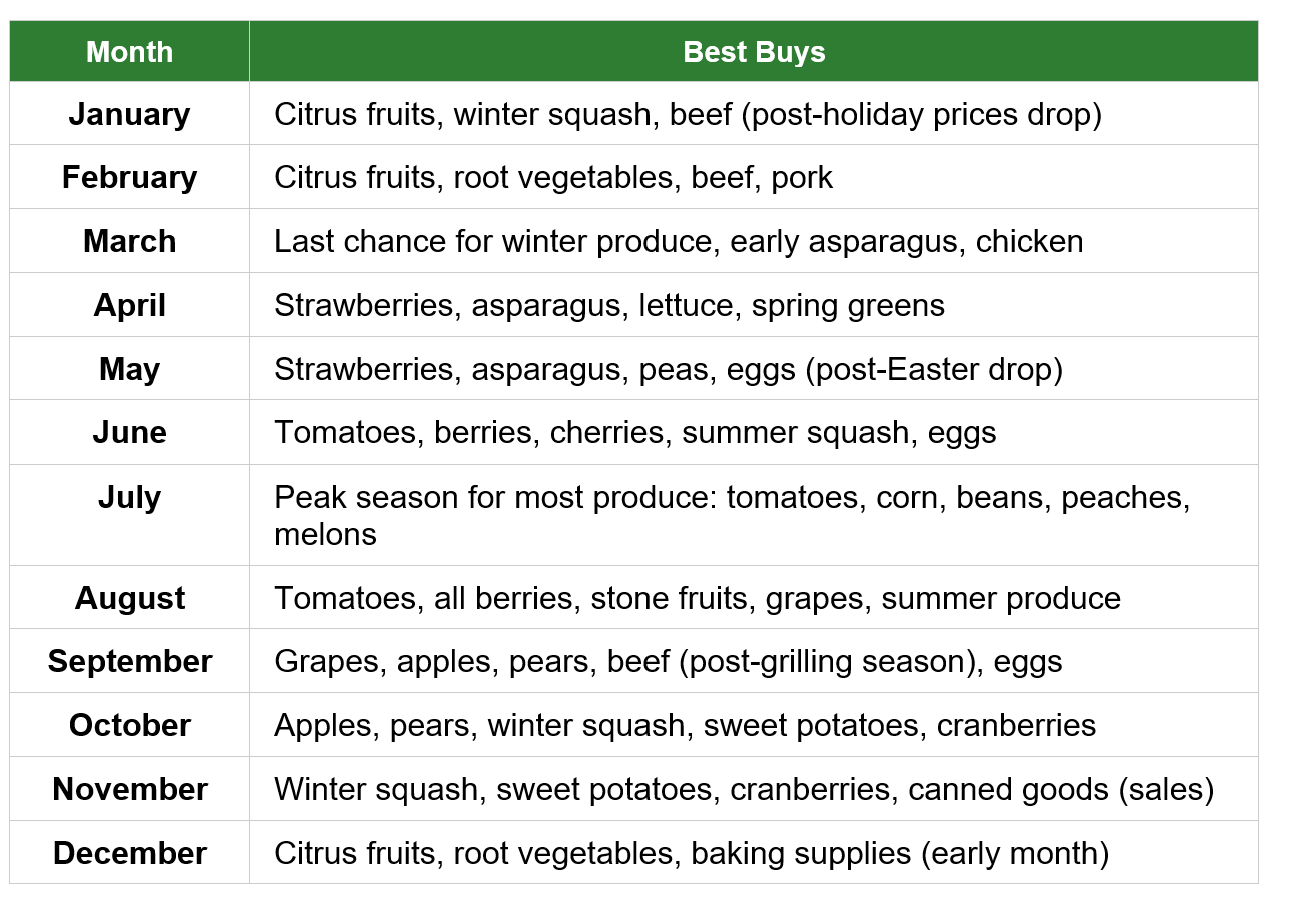
Quick Reference: Monthly Shopping Priorities
Your Pittsburgh Produce Price Calendar
Fresh produce shows the most dramatic seasonal price swings. Here's when to buy for the best deals:
Winter (January-March): Citrus Season
Best Buys:
- Citrus fruits (oranges, grapefruits, lemons)
- Winter squash (butternut, acorn)
- Root vegetables (carrots, beets, turnips)
- Cabbage and Brussels sprouts
Avoid:
- Fresh tomatoes (prices spike in winter—use canned instead)
- Berries (expensive imports)
- Stone fruits (peaches, plums—wait until summer)
Smopper Tip: Stock up on citrus when prices drop in January and February. Oranges and grapefruits store well for weeks in the refrigerator.
Spring (April-June): Fresh Greens & Berries Arrive
Best Buys:
- Strawberries (prices drop dramatically from April through summer)
- Asparagus
- Lettuce and leafy greens
- Radishes and spring onions
- Peas
Avoid:
- Winter squash (prices rising as supplies dwindle)
- Grapes (wait until late summer)
Smopper Tip: May brings peak strawberry season—perfect time to buy in bulk and freeze for smoothies and baking throughout the year.
Summer (July-September): Peak Produce Season
Summer is when Pittsburgh-area farmers markets overflow with local produce, and grocery store prices reflect that abundance.
Best Buys:
- Tomatoes (cheapest from June through September)
- All berries (blueberries, raspberries, blackberries)
- Stone fruits (peaches, plums, nectarines, cherries)
- Sweet corn
- Zucchini and summer squash
- Cucumbers
- Green beans
- Watermelon and cantaloupe
- Grapes (prices drop dramatically in late August/September)
Avoid:
- Root vegetables (wait until Fall)
- Winter squash (not in season yet)
Smopper Tip: This is prime canning and freezing season. Use Smopper to find the best prices on bulk tomatoes, berries, and peaches, then preserve them for winter.
Fall (October-December): Harvest Time
Best Buys:
- Apples and pears
- Sweet potatoes
- Winter squash (butternut, acorn, pumpkin)
- Cranberries
- Brussels sprouts
- Cabbage and cauliflower
- Pomegranates
Avoid:
- Summer produce (tomatoes, berries, stone fruits)
- Asparagus
Smopper Tip: November is peak time for buying winter squash. They store for months in a cool, dry place—perfect for soups and roasts all winter long.
Meat Price Patterns: Timing Your Protein Purchases
Meat prices have been climbing, with beef and pork up 4-5% year-over-year. But seasonal patterns still create opportunities for savings.
Beef: Grilling Season Spikes
Beef prices follow a clear seasonal pattern driven by demand. Prices typically rise from May through July as grilling season kicks off, with steaks and ground beef seeing the biggest increases.
Best Times to Buy:
- January-March: Post-holiday lull means lower prices
- September-November: After summer grilling season ends
Avoid Buying:
- Memorial Day through July 4th (peak grilling season demand)
- Week before major holidays
Smopper Tip: Stock your freezer with ground beef and steaks in February and March. Beef freezes beautifully for 6-12 months.
Chicken: Relatively Stable with Summer Bumps
Good news for Pittsburgh shoppers: fish and poultry prices have actually dropped in our area recently. Chicken prices remain more stable than beef throughout the year, though you'll still see slight increases during summer grilling season.
Best Times to Buy:
- Winter months (January-March)
- September-October
Smopper Tip: Whole chickens are almost always cheaper per pound than parts. Learn to break down a chicken yourself for maximum savings.
Pork: Holiday and Summer Peaks
Pork prices spike around major holidays and during grilling season, particularly for popular cuts like ribs and pork chops.
Best Times to Buy:
- January-February
- Late summer/early fall
Avoid Buying:
- Memorial Day through July 4th
- Easter week
- Thanksgiving week (ham prices spike)
Year-Round Strategies for Pantry Staples
Some grocery items don't have strong seasonal patterns, but that doesn't mean you can't save money on them.
Grains, Beans, and Pasta
These shelf-stable staples saw significant price increases in Pennsylvania—they were a major driver of our state's higher-than-average grocery inflation. While seasonal patterns are minimal, prices do fluctuate with grain harvests and global commodity markets.
Money-Saving Strategies:
- Use Smopper to compare prices across stores—variations can be 30-40%
- Consider buying at international markets for rice, beans, and pasta
- Buy in bulk when on sale—these items store indefinitely
Canned Goods
Unlike fresh produce, canned goods don't show strong seasonal price swings. However, you'll often find sales around major holidays when stores stock up for holiday meals.
Best Times for Deals:
- Thanksgiving week (canned pumpkin, cranberry sauce, green beans)
- Around Christmas (baking supplies, canned fruit)
- Back-to-school season (soups, canned vegetables)
These rules are thumb for when to buy certain foods are good to keep in mind, but don't pass up on a good price because of timing. Remember, there are a lot of reasons a store may decide to offer special pricing and it's always good to keep an eye out for those opportunities.